
Ukiyō-e


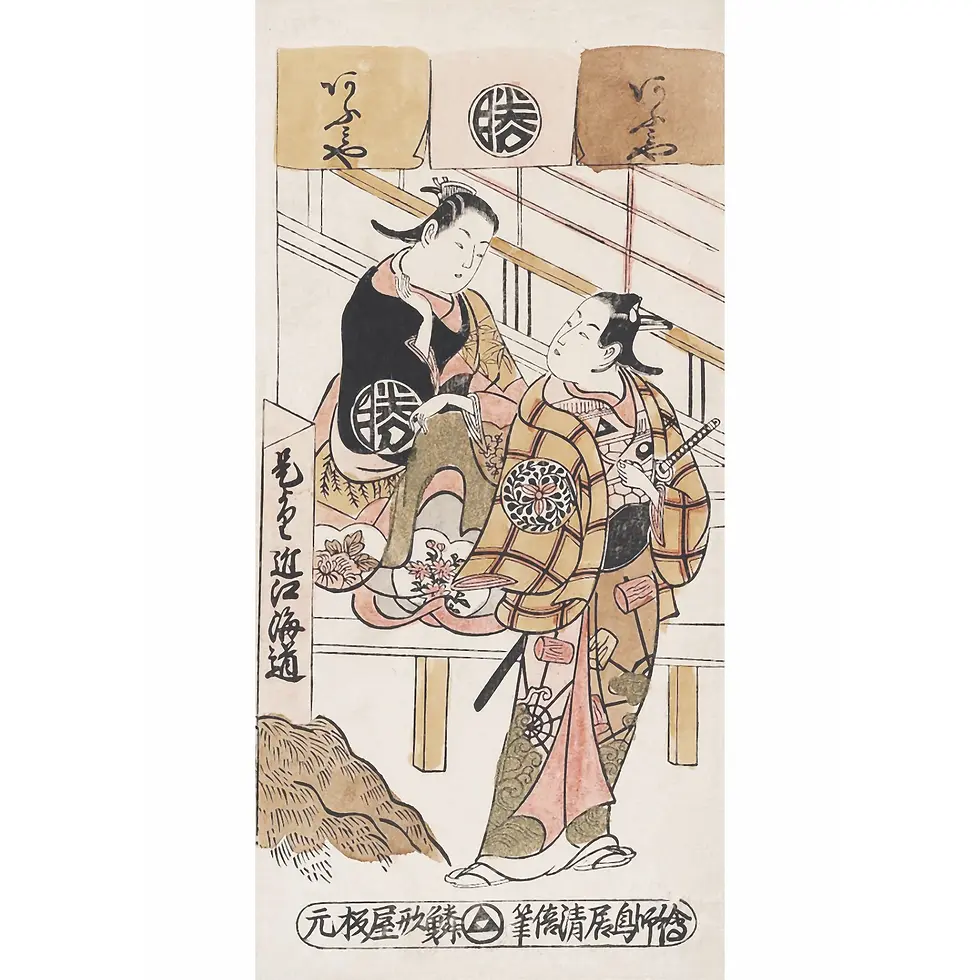


The Ukiyo-e movement, translating to "Pictures of the Floating World," served as the visual heartbeat of Japan’s Edo period (1603–1867). During this era of unprecedented peace, a burgeoning urban merchant class sought escape in the floating pleasures of the Yoshiwara pleasure districts and Kabuki theatres. This demand birthed a revolutionary art form - woodblock prints and paintings that immortalised fashion, fleeting leisure, and the celebrity culture of the day.
The genre’s evolution was driven by visionary masters. Early pioneers like Hishikawa Moronobu established the foundation, while Suzuki Harunobu revolutionised the field in the 1760s with nishiki-e (polychrome brocade prints). The late 18th century saw the height of figure prints, with Kitagawa Utamaro’s ethereal beauties (bijin-ga) and Toshūsai Sharaku’s haunting, psychological portraits of Kabuki actors.
As the 19th century dawned, the focus shifted toward the sublime power of nature. Katsushika Hokusai and Utagawa Hiroshige became global icons, their sweeping landscapes- such as The Great Wave and One Hundred Famous Views of Edo - capturing the spiritual and physical essence of the Japanese countryside. Collectively, these artists created a democratic art form that eventually ignited the Japonisme movement, forever altering the course of Western modernism.