


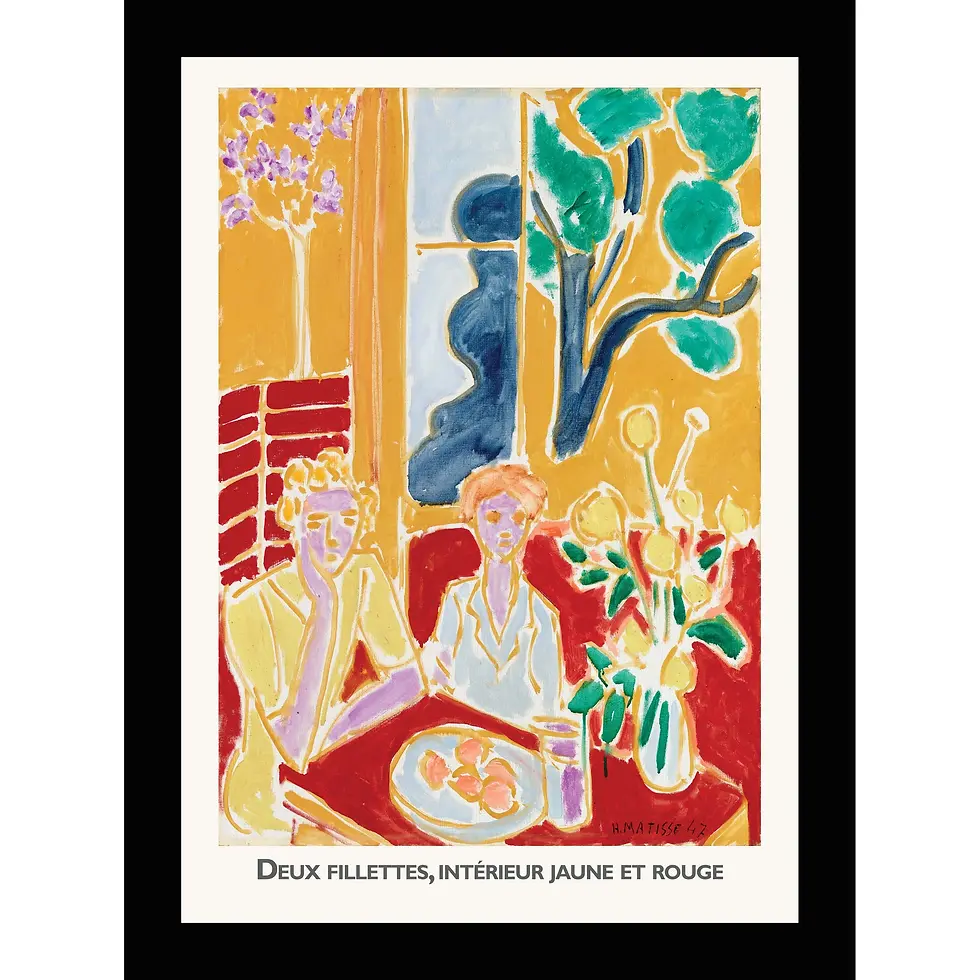

Henri Matisse’s Jazz (1947) is one of the most celebrated works of his late career and a powerful statement of artistic reinvention. Created when Matisse was in his seventies and recovering from serious illness, Jazz marks his transition from painting to the bold, experimental medium of paper cut‑outs, which he described as “drawing with scissors". Unable to work at an easel, Matisse cut shapes directly from sheets of paper painted in vivid gouache, arranging them into dynamic compositions full of movement and energy.
Although titled Jazz, the series is not a literal response to music. Instead, the name reflects the improvisational spirit of the works. The images draw inspiration from the circus, theatre, travel, mythology, and memory. Figures leap, float, and collide across the page, created from simplified organic forms and intense, flat colour. Black shapes, especially in works like Icarus, heighten contrast and drama, while handwritten text adds a personal, rhythmic counterpoint to the images.
Jazz represents the culmination of Matisse’s lifelong exploration of colour and form. Stripped of detail yet emotionally rich, the series demonstrates how limitation became freedom, transforming constraint into one of the most joyful and influential works of modern art.