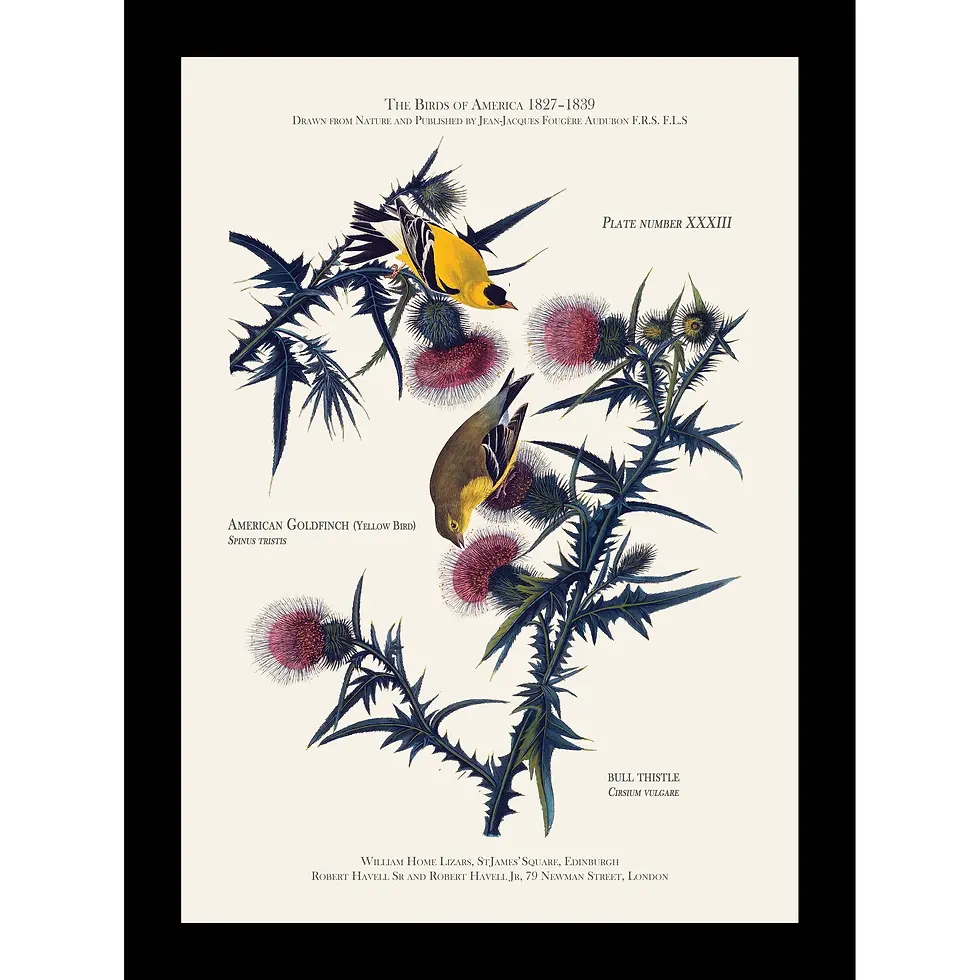


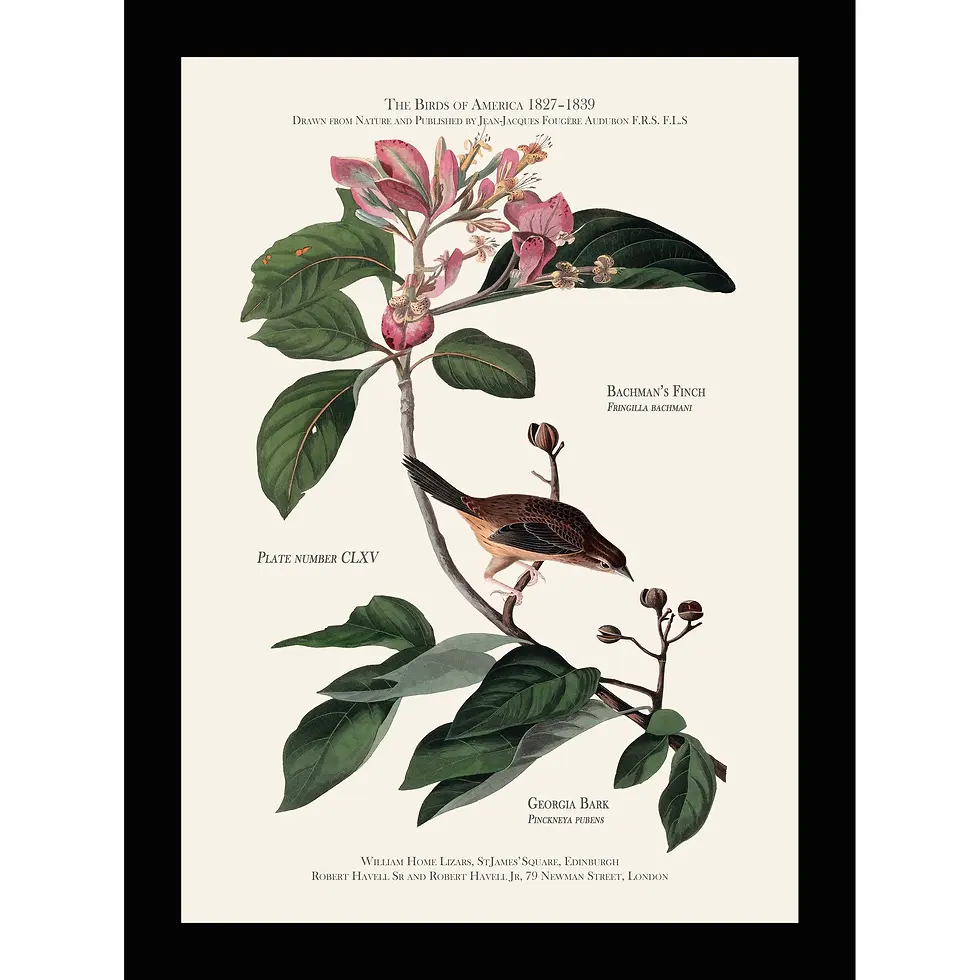


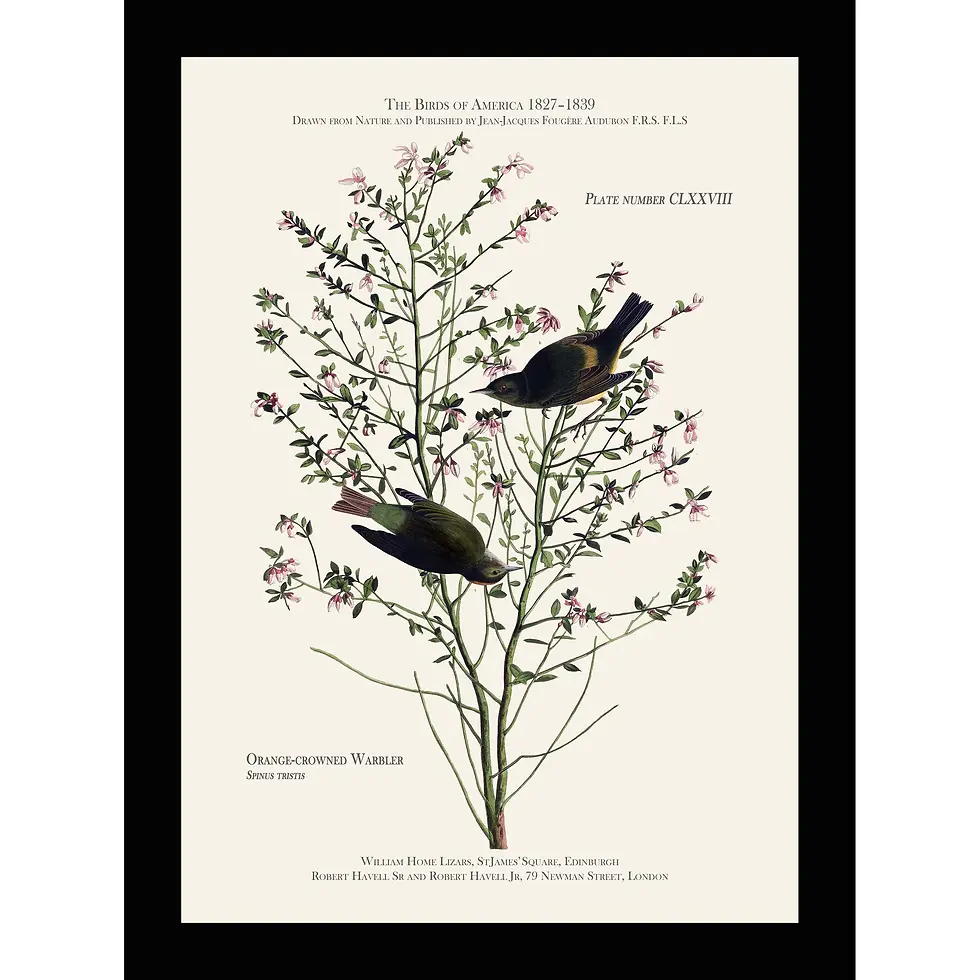


The Birds of America is considered a landmark book because it transformed both ornithology and visual art through its unprecedented scale, accuracy, and ambition. Published between 1827 and 1838, the work contains 435 hand‑coloured, life‑size illustrations of North American birds, printed on enormous double‑elephant folio pages. No previous natural history book had attempted to depict birds at their true size and in dynamic, lifelike poses, breaking decisively from the stiff, diagrammatic tradition of earlier scientific illustration.
Audubon’s approach combined close field observation with artistic drama. He portrayed birds interacting with their environments - hunting, flying, fighting - while maintaining anatomical precision. This balance between art and science set new standards for wildlife illustration and influenced how nature was visually documented thereafter.
The book is also scientifically significant. It recorded species that were poorly known at the time and now serves as a crucial historical record for several extinct birds, including the passenger pigeon and Carolina parakeet.
Finally, The Birds of America helped shape public attitudes toward nature. Its beauty and scale elevated wildlife to a subject worthy of serious artistic and scientific attention, laying cultural groundwork that later supported conservation movements in the United States and beyond.