


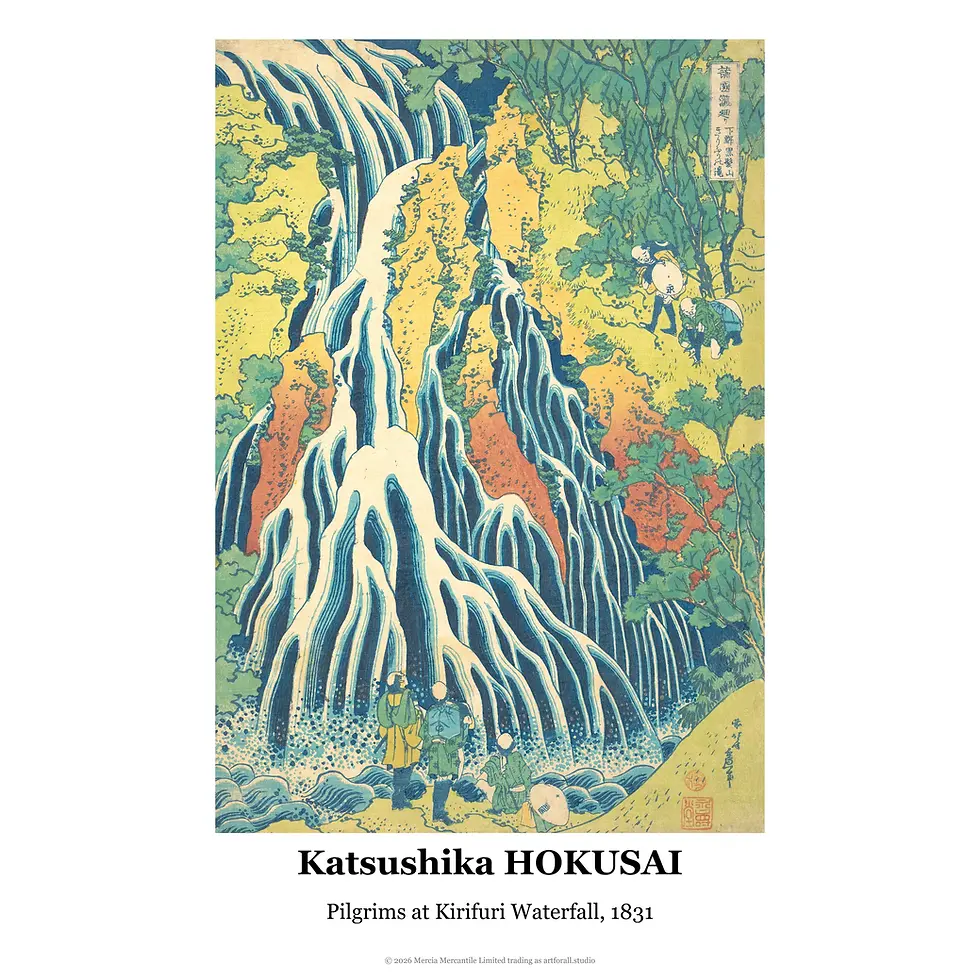


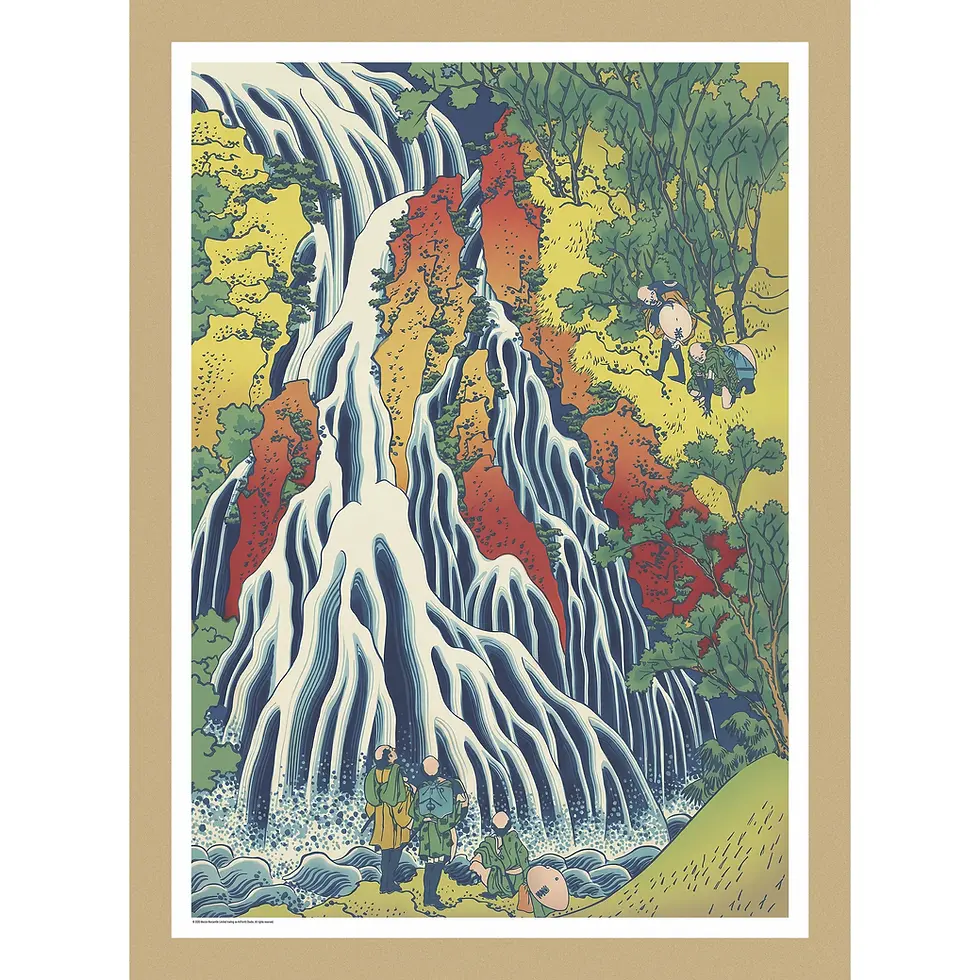


Meishō-e, or Pictures of Famous Places, is a Japanese art sub-genre dedicated to depicting renowned scenic sites, historic landmarks, and celebrated travel routes across Japan. Emerging before the rise of Ukiyo-e, Meishō-e helped shape Japan’s visual culture by linking specific views with poetry, literature, and pilgrimage. These images often showed temples, shrines, mountains, bridges, and seasonal landscapes, inviting viewers to experience both the physical beauty of a place and its cultural or spiritual significance.
During the Edo Period (1603–1867), Meishō-e flourished alongside a growing travel culture, as guidebooks, maps and woodblock prints made famous locations more widely known and visually accessible. Artists such as Katsushika Hokusai (1760–1849) and Utagawa Hiroshige (1797–1858) brought the genre to international fame with their dynamic compositions, bold use of colour, and inventive perspectives. Their series on famous views and travel routes transformed Meishō-e into a global sensation, influencing not only Japanese audiences but also Western artists and collectors. Today, Meishō-e is recognised as a key foundation of Japanese landscape printmaking, bridging traditional place-based imagery and the later, more urban and pleasure-focused world of Ukiyo-e.