


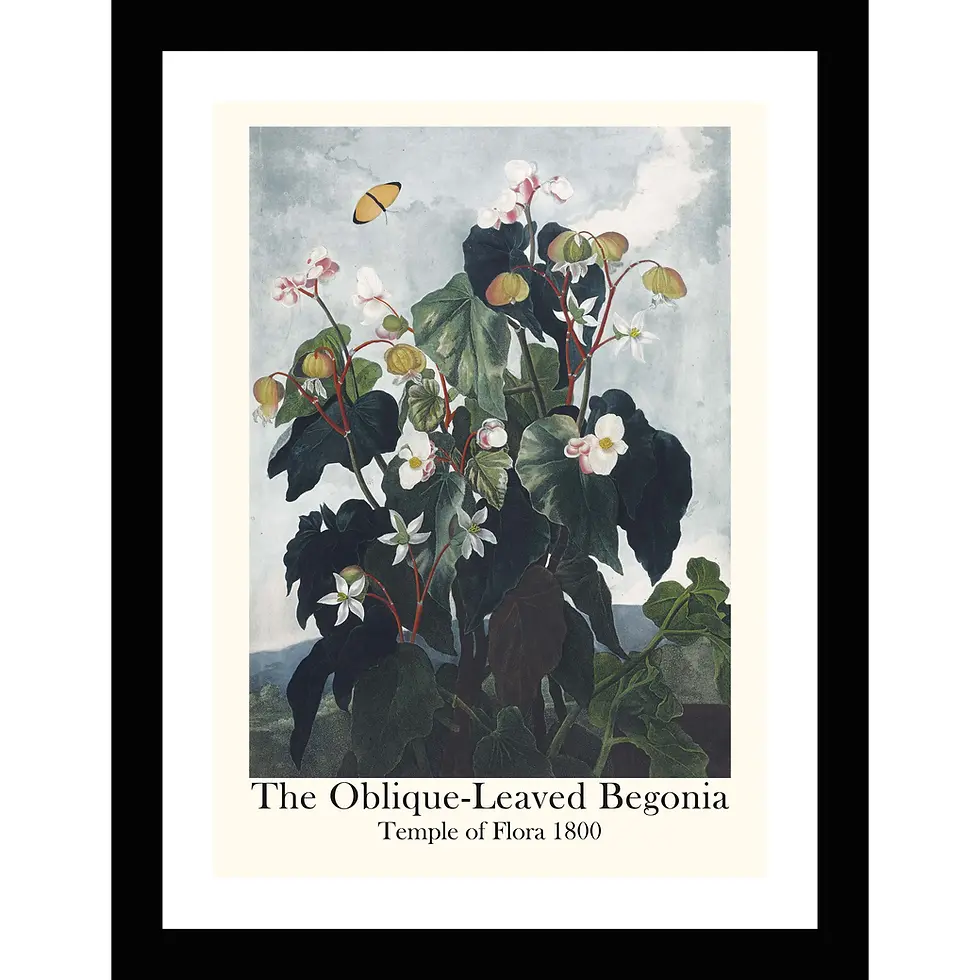


Dr Robert John Thornton’s Temple of Flora stands as one of the most ambitious and beautiful botanical books ever produced. Published between 1799 and 1807 as part of his larger work illustrating the Linnaean system of plant classification, it elevated botanical illustration beyond scientific documentation into the realm of fine art. Thornton enlisted some of the finest artists and engravers of his day to create spectacular hand-coloured plates, placing flowers within dramatic landscapes, atmospheric skies, and symbolic settings. The result was a revolutionary fusion of science, poetry, mythology, and Romantic imagination.
Unlike traditional botanical studies, the flowers in The Temple of Flora are presented as protagonists in grand visual narratives. Roses bloom against glowing horizons, tulips rise from theatrical landscapes, and exotic specimens are framed by moonlight, storms, and classical architecture. These lavish images were accompanied by botanical descriptions, folklore, and poetic texts, reflecting Thornton’s belief that nature should inspire both intellectual understanding and emotional wonder.
Yet the project became a financial disaster. Thornton invested his personal fortune in the publication, but public interest failed to meet his expectations. Despite the masterpiece he had created, he lost his wealth and saw the venture collapse. Today, The Temple of Flora is celebrated as a landmark of botanical art, but its creator did not live to enjoy that acclaim. Thornton's life ended in poverty, a tragic fate for the visionary whose passion produced one of the greatest flower books ever published.