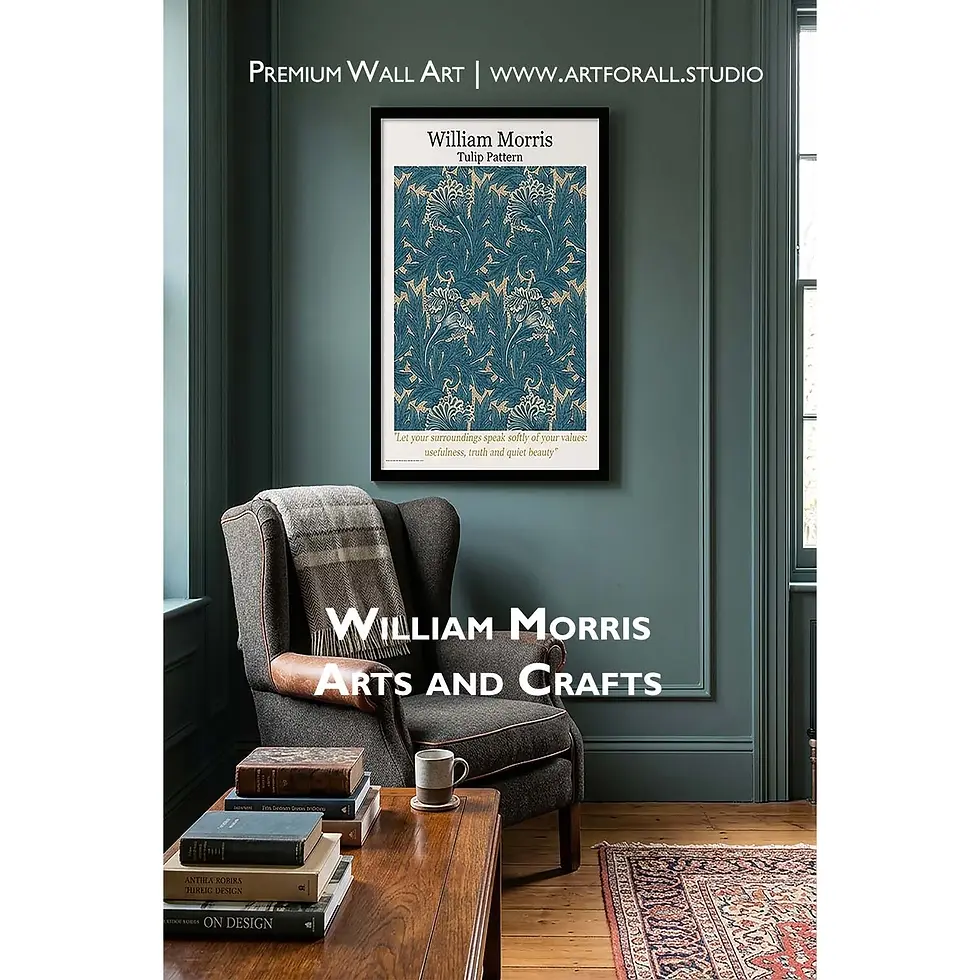



The Arts and Crafts movement was a pioneering British design and social reform movement that flourished from around 1860 to 1930. Rooted in a deep respect for craftsmanship, it arose as a reaction against industrial mass production and the loss of quality and integrity in everyday objects. Central to Arts and Crafts ideals was the belief that beauty, utility, and honest materials should shape everything from furniture and textiles to architecture and book design.
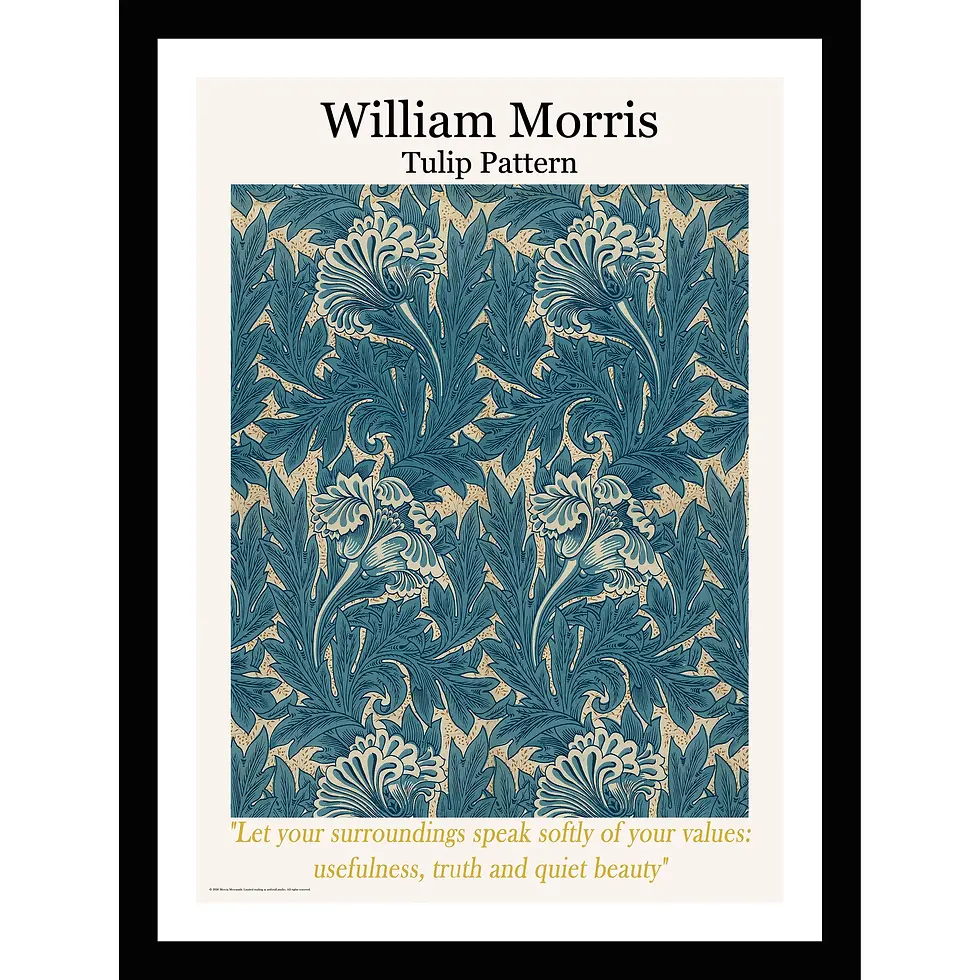
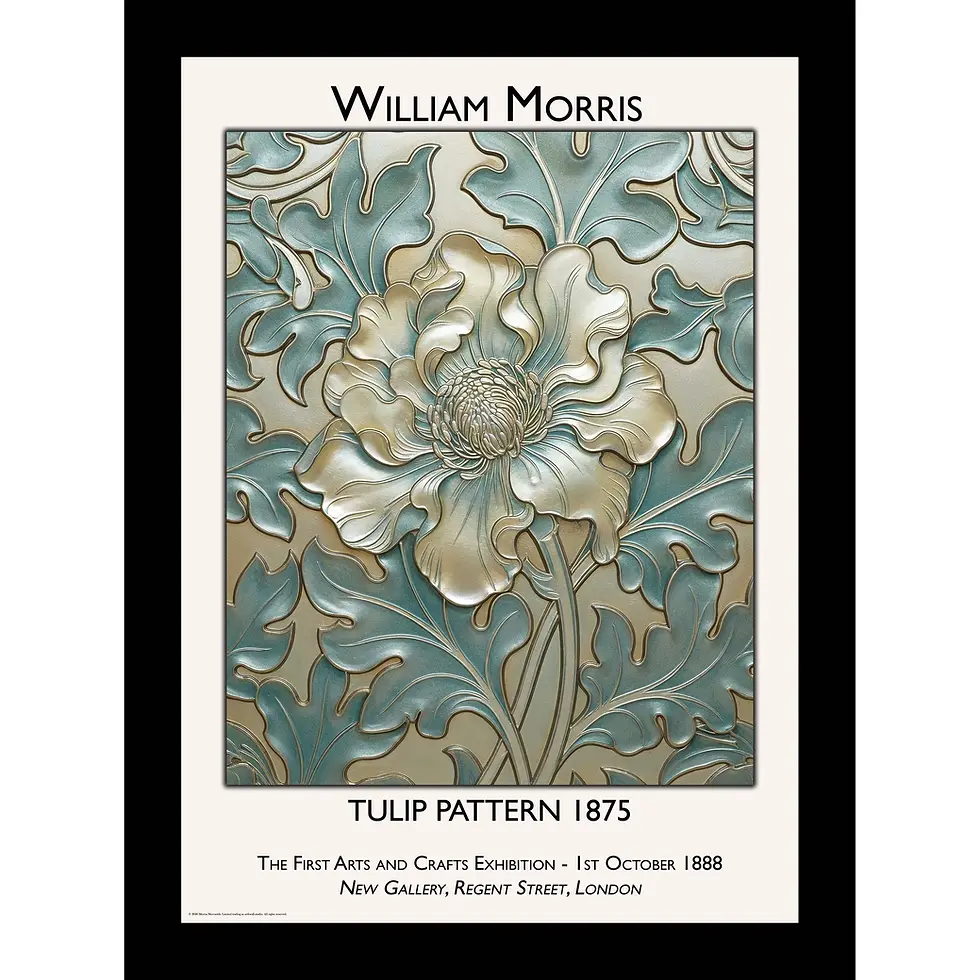
Influenced profoundly by the writings of John Ruskin, the movement championed the moral value of handcraft, the dignity of labour, and the importance of connecting art with daily life. William Morris transformed these principles into practice, creating richly patterned wallpapers, textiles, and handcrafted objects that embodied the Arts and Crafts philosophy. His workshops and firms promoted traditional skills, from weaving and printing to stained glass and metalwork.
Today, the Arts and Crafts movement remains a powerful inspiration for designers, makers, and homeowners seeking authentic, sustainable, and handcrafted design. Its emphasis on natural materials, simple forms, and meaningful decoration continues to shape interiors, bespoke furniture, and artisan-made products associated with William Morris, John Ruskin, and the enduring Arts and Crafts legacy.